Historic Weeksville Board of Directors Staff Contact Directions Site Map
School Tours Public Tours
Education Historic Preservation Research Public
Become a Member Become a Volunteer Our Funders Donate Now
Newsletter Press Desk In The News Press Releases Photo Gallery

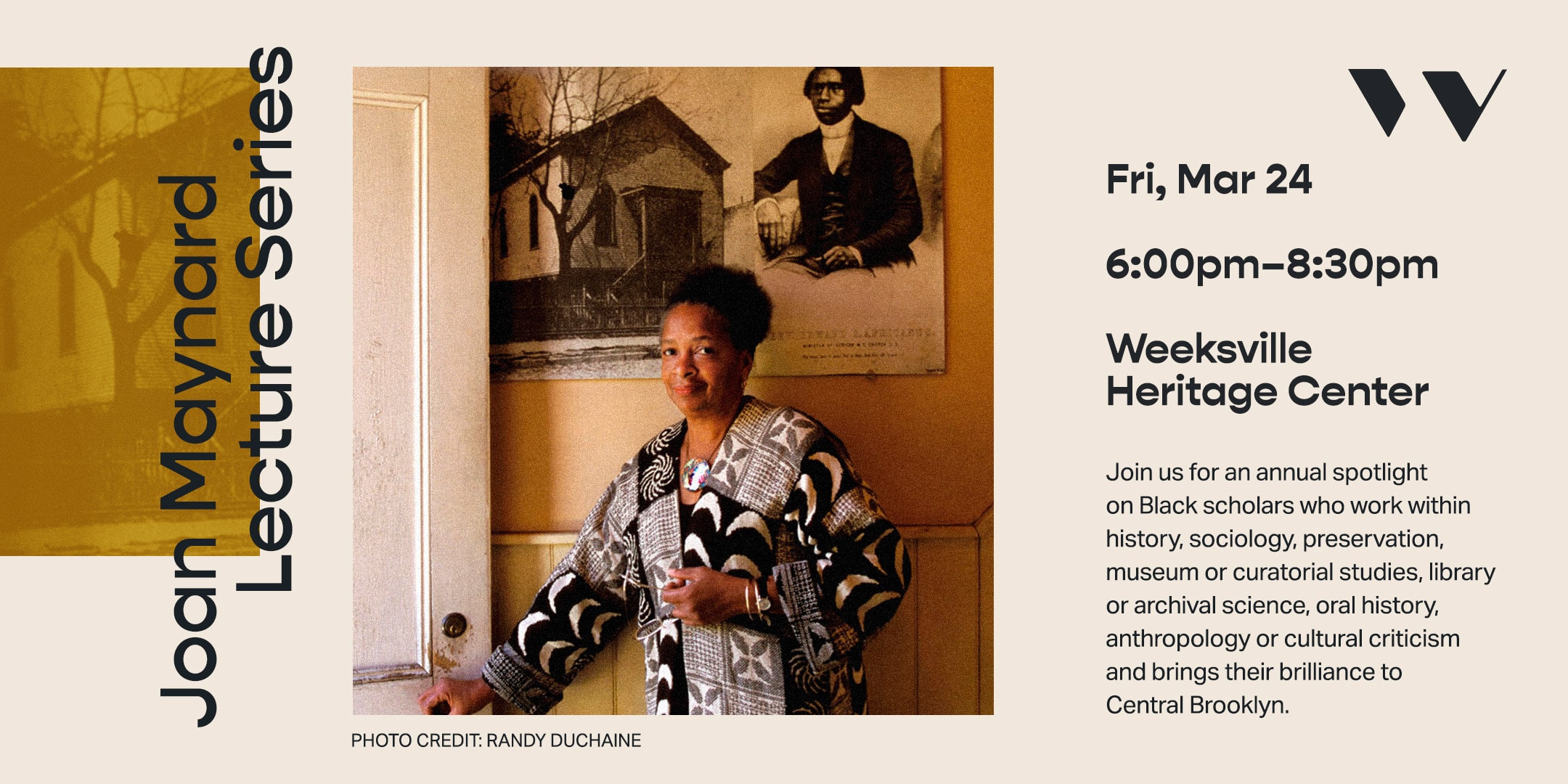
Joan Maynard

Joan MaynardJoan Cooper Bacchus Maynard (August 29, 1928-January 22, 2006) was a stalwart champion of historic preservation and education through museum development. We remain forever grateful to her for sharing her vision of Weeksville with others, thus helping to preserve an important part of African American history.

Joan was a founding member in 1968 of the Society for the Preservation of Weeksville & Bedford-Stuyvesant History. She served as its president from 1972 to 1974. In 1974, she became the Society’s first executive director, serving until October 1999. She was director emeritus of the Weeksville Heritage Center (the name the Society adopted in 2005) and ex-officio trustee of the Center’s Board of Trustees until her death.

Joan Maynard was a commercial artist in the 1960s, working as an art director for McGraw-Hill. She also used her artistic talent to present the history of people of African descent. She illustrated and wrote for Golden Legacy Magazine, which presented Black history in comic book format. She also illustrated covers for Crisis Magazine, the official voice of the N.A.A.C.P., and she created The Family of AMA, a 40-panel storyboard painting with text that illustrated the African Diaspora.

But perhaps her greatest achievement was keeping the spirit of Weeksville alive. Weeksville was a self-sufficient 19th century African American community named after James Weeks, who had acquired property in the early 1800s. By the 1860s, Weeksville was a bustling community with Black-owned and -run businesses, schools, churches, an orphanage. a home for the elderly and other institutions. It also was a safe haven for many Blacks who fled the chaos of Civil War draft riots in lower Manhattan. Weeksville’s population and its independence as a community dissipated by the 1930s, and the community all but disappeared until four houses, the community’s last surviving intact residential structures, were rediscovered in the 1960s.

Joan Maynard was the driving force behind their restoration. Her passionate presentations to school children resulted in their getting involved in the fight to save the houses. Her grassroots leadership helped to piece together financing from government and corporations. She even donated her own personal savings to the cause. Thankfully, she lived to see Weeksville’s historic Hunterfly Road Houses restored and reopened to the public last June, with much fanfare and a keynote speech delivered by Senator Hillary Clinton.

Widely recognized for her preservation work, Joan was honored as a Restore America Hero by the National Trust for Historic Preservation and Home & Garden Television (HGTV). She received the highest honor awarded by the National Trust for Historic Preservation, its Louise DuPont Crowinshield Award. She also received a Lucy G. Moses Preservation Award from the New York Landmarks Conservancy, which she served as a board member. Joan received a posthumous Lifetime Achievement Award from Brooklyn District Attorney Charles Hynes. Her greatest honor, however, might easily have come from any individual walking by the restored houses with a proud smile. Nurturing a sense of identity and linking us to our rich history was Joan’s driving desire.

Joan was born in Brooklyn in 1928 to John W. Cooper, a ventriloquist, and his wife, Juliana St. Bernard Cooper, who hailed from the Caribbean island-nation of Grenada. She graduated from Bishop McDonnell Memorial High School and became a scholarship student at the Art Career School in Manhattan. She also was a graduate of Empire College of the State University of New York. She attended Columbia University as a Revson Fellow, and received an honorary doctorate from the Bank Street College of Education.